Senior Citizen Who Lost ₹22.92 Crore in Digital Arrest Scam Moves Supreme Court Seeking Preventive Guidelines and Restitution
Lexpedia News · 24 January 2026 · 6 min read
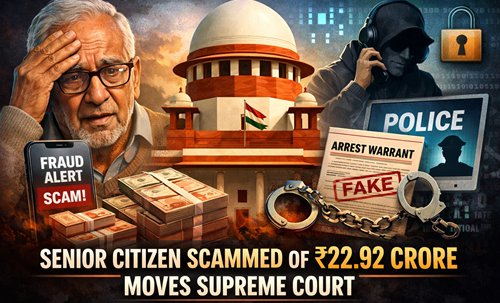
An 82-year-old senior citizen who was defrauded of ₹22.92 crore in a digital arrest scam — reportedly one of the largest individual losses in such frauds in India — has moved the Supreme Court of India seeking preventive national guidelines and mechanisms for restitution of lost funds.
A Bench comprising Chief Justice of India Surya Kant and Justice Joymalya Bagchi issued notices to the Union Government of India, the Reserve Bank of India (RBI), the Central Bureau of Investigation (CBI) and seven private banks named in the petition.
About the Fraud
According to the Supreme Court petition (Naresh Malhotra v. Union of India & Ors., W.P. (Crl.) No. 15/2026), the petitioner was targeted while living alone and recuperating from health treatment, with his children abroad. Fraudsters impersonated law enforcement, judicial authorities and investigative agencies, sharing forged Supreme Court orders through WhatsApp messages and video calls that purportedly required him to transfer funds to avoid arrest and seizure of property.
Under sustained threats and believing the fabricated documents to be genuine, the petitioner conducted multiple bank transfers amounting to ₹22.92 crore — effectively his life savings — to accounts controlled by the criminals.
Respondents Named
In the writ petition, the senior citizen has named several major banks as respondents, accusing them of “gross negligence” in processing suspicious high-value transactions:
-
Kotak Mahindra Bank
-
HDFC Bank
-
Axis Bank
-
ICICI Bank
-
IndusInd Bank
-
City Union Bank
-
Yes Bank
His counsel argued that banks should owe a heightened duty of care to elderly and vulnerable customers, particularly when unusually large transactions are initiated and that they should have systems in place to flag and halt suspicious activity.
Reliefs Sought in the Petition
The petitioner has sought a range of directions from the Supreme Court, including:
-
A uniform national policy to prevent and respond to digital arrest scams, ensuring coordinated action between the Ministry of Home Affairs (MHA), RBI and cybercrime enforcement agencies.
-
Directions to RBI to enforce strict compliance with fraud risk management norms, customer protection guidelines, and to require real-time national systems for fraud detection and inter-bank fund freezing.
-
Specific orders for identifying and blocking mule accounts used by fraudsters and ensuring restitution of funds diverted from victims’ accounts.
-
Directions to the Ministry of Finance to oversee effective regulatory safeguards across financial institutions and ensure immediate reporting and blocking of suspicious transfers.
-
Orders to the Ministry of Telecommunications to implement telecom-based fraud alerts and block scam-linked numbers.
-
A writ to the CBI to take over the investigation from the State and conduct a swift, comprehensive probe, including freezing and recovery of diverted funds and dismantling the fraud network.
-
Relief from capital gains tax liability to the extent it relates to funds generated from sale of securities that were subsequently fraudulently transferred.
Notice and Next Steps
The Supreme Court issued notice on all respondents in the petition — except for certain prayer points (B, C and D) which the petitioner was advised to pursue before the appropriate consumer forum such as the National Consumer Disputes Redressal Commission.
The matter will now proceed after responses are filed by the government, regulators, law-enforcement and the banks.
Digital Arrest Scams: A Broader Menace
“Digital arrest” scams involve fraudsters impersonating law-enforcement, investigative agencies, judicial authorities or government officials to intimidate victims into transferring funds or revealing sensitive banking credentials. They typically use fake documents, video calls and threats of prosecution or arrest to coerce compliance.
In recent months, the Supreme Court has taken suo motu cognizance of the rising prevalence of such scams and called for coordinated investigations by the CBI, while urging discussion on preventive measures and victim compensation — signaling the seriousness with which the judiciary views the issue.
Implications
Legal experts say the petition, if successful, could lead to binding nationwide guidelines for financial institutions and regulators to prevent and respond to sophisticated cyber frauds — potentially creating mechanisms for early detection, real-time intervention and restitution of funds for victims. The case also raises broader questions about the duty of banks in protecting elderly and vulnerable customers from high-value, suspicious transactions.
डिजिटल अरेस्ट स्कैम में 22.92 करोड़ रुपये गंवाने वाले वरिष्ठ नागरिक ने सुप्रीम कोर्ट में प्रिवेंटिव गाइडलाइंस और मुआवजे की याचिका दायर की
82 वर्षीय वरिष्ठ नागरिक ने डिजिटल अरेस्ट स्कैम में ₹22.92 करोड़ की धोखाधड़ी के खिलाफ सुप्रीम कोर्ट में याचिका दायर की है, जिसमें उन्होंने रोकथाम के लिए निर्देश, राष्ट्रीय नीति और हानि की वसूली (रिट्रोस्टीशन) के उपाय मांगे हैं। इस प्रकार का व्यक्तिगत स्तर पर अब तक का सबसे बड़ा डिजिटल स्कैम माना जा रहा है।
चीफ जस्टिस ऑफ इंडिया सूर्यकांत और न्यायमूर्ति जॉयमाल्य बागची की बेंच ने इस मामले में केंद्र सरकार, भारतीय रिज़र्व बैंक (RBI), CBI और सात प्राइवेट बैंकों को नोटिस जारी किया है।
क्या हुआ था?
याचिका के अनुसार, याचिकाकर्ता अकेले रहते थे और स्वास्थ्य उपचार से उबर रहे थे, जब धोखेबाजों ने उन्हें निशाना बनाया। आरोपियों ने कानून प्रवर्तन, न्यायिक अधिकारियों और एजेंसियों का रूपधारण कर फर्जी सुप्रीम कोर्ट के आदेश भेजे, और कहा कि अगर वह तुरंत कार्रवाई नहीं करेंगे तो गिरफ्तारी व संपत्ति ज़ब्त कर ली जाएगी।
इस डर और धमकी के तहत उन्होंने कई बार बैंक ट्रांज़ैक्शन्स किये, जिनमें उनकी पूरी जमा पूंजी ₹22.92 करोड़ तक चली गई।
कौन हैं प्रतिवादी?
याचिका में मुख्य रूप से इन बैंकों को शामिल किया गया है, जिन पर ‘घोर लापरवाही’ का आरोप लगाया गया है:
-
कोटक महिंद्रा बैंक
-
HDFC बैंक
-
एक्सिस बैंक
-
ICICI बैंक
-
इंडसइंड बैंक
-
सिटी यूनियन बैंक
-
यस बैंक
याचिकाकर्ता के वकील ने अदालत को बताया है कि बुज़ुर्ग और कमजोर ग्राहकों की सुरक्षा के लिए बैंकों की जिम्मेदारी बढ़ जाती है, खासकर जब बड़े वित्तीय लेन-देन होते हैं।
याचिका में मांगी गई मुख्य मांगें
याचिका में सुप्रीम कोर्ट से कई निर्देशों की मांग की गई है, जिनमें शामिल हैं:
-
डिजिटल अरेस्ट स्कैम रोकने और उसके लिए एक राष्ट्रीय नीति बनाने के लिए निर्देश।
-
RBI को निर्देश देना कि वह सभी बैंकों को धोखाधड़ी प्रबंधन, KYC नियम और ग्राहक सुरक्षा सर्कुलर का कठोर पालन सुनिश्चित करे।
-
वह कदम उठाया जाए जिससे म्यूल खातों की पहचान और ब्लॉकिंग हो तथा धोखाधड़ी से ली गई रकम वसूल की जाए।
-
वित्त मंत्रालय को निर्देश देना कि उच्च जोखिम वाले ट्रांज़ैक्शन्स की निगरानी और कार्रवाई सुनिश्चित की जाए।
-
दूरसंचार मंत्रालय को धोखाधड़ी से जुड़े नंबरों की पहचान व ब्लॉकिंग के लिए निर्देश।
-
CBI को जांच लेने, फंड्स को फ्रीज़ व रीकवर करने तथा स्कैम नेटवर्क को खत्म करने के लिए निर्देश।
-
उन धनराशियों पर पूंजीगत लाभ कर से छूट देने के निर्देश, जो धोखाधड़ी के कारण खो दिए गए।
अंतरिम कार्रवाई
सुप्रीम कोर्ट ने सभी प्रतिवादियों को नोटिस जारी किया है, लेकिन कुछ याचिका के अनुरोध (B, C और D) को संबंधित कंज्यूमर फोरम के पास ले जाने का निर्देश दिया है।
अब इस मामले में उत्तरदाताओं के जवाब का इंतजार है, जिसके बाद अगली सुनवाई होगी।
डिजिटल अरेस्ट स्कैम क्या है?
डिजिटल अरेस्ट स्कैम एक प्रकार का साइबर फ़्रॉड है, जिसमें धोखेबाज - पुलिस अधिकारी, जांच एजेंसियों या न्यायिक अधिकारियों के रूप में खुद को पेश कर पीड़ित को डराते हैं और पैसे ट्रांसफर करने के लिए मजबूर करते हैं। ये आम तौर पर व्हाट्सएप, वीडियो कॉल या फोन के माध्यम से किए जाते हैं।
क्या मायने रखता है?
विश्लेषकों के अनुसार, यह याचिका यदि सफल होती है तो यह बैंकों, नियामकों और एजेंसियों के लिए दुनिया भर में बैंकों और कानून-पालन संस्थाओं के लिए मार्गदर्शक नीतियाँ तय कर सकती है, जिससे भविष्य में ऐसे साइबर अपराधों की रोकथाम, पता लगाना और पीड़ितों को हानि की वसूली सुनिश्चित हो सकती है।