
State v. Babulal Malviya, 2025
The judgment highlighted that failure to provide reasons undermines legal transparency and accountability.
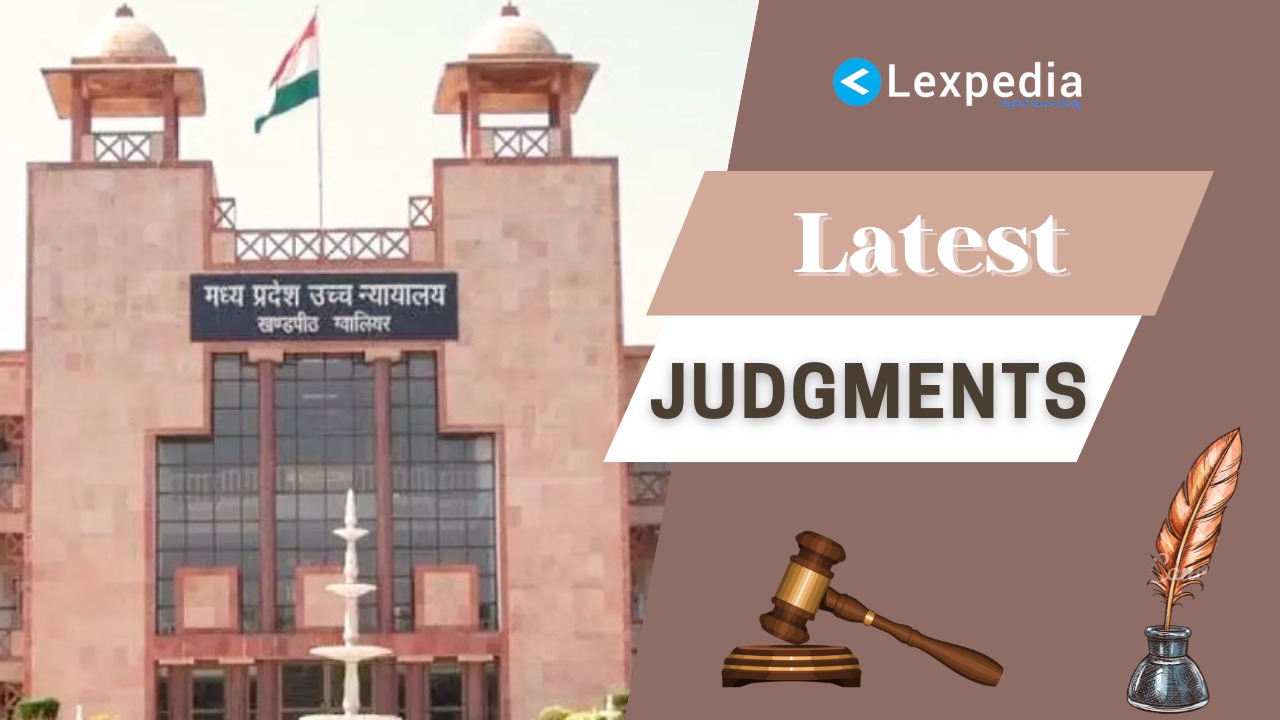
Judgement Details
Court
Madhya Pradesh High Court
Date of Decision
13 December 2025
Judges
Justice Rajendra Kumar Vani
Citation
Acts / Provisions
Facts of the Case
-
The respondent/accused, Babulal Malviya, was convicted by the trial court for voluntarily causing hurt under Section 323 IPC.
-
The trial court sentenced him to six months’ rigorous imprisonment and a fine of Rs. 1,000, with a default stipulation.
-
The accused appealed to the Appellate Court.
-
The Appellate Court acquitted him through a one-line, cryptic, non-speaking order without assigning any reasoning.
-
The State filed an appeal challenging this appellate acquittal, arguing that the order was legally improper and non-speaking.
Issues
-
Whether the Appellate Court erred in passing a short, cryptic, and non-speaking order without assigning reasons?
-
Whether appellate courts are required to analyze evidence and reasoning of the trial court before setting aside convictions?
-
Whether the impugned appellate order suffers from perversity and illegality due to lack of judicial reasoning?
Judgement
-
The Madhya Pradesh High Court noted that a judicial officer in an appellate court is expected to pass a reasoned order.
-
A one-line order without discussion of evidence or reasoning is not proper.
-
Appellate courts must discuss merits, analyze evidence, and cross-check the reasoning of the trial court before setting aside a conviction.
-
The High Court set aside the impugned judgment of the Appellate Court.
-
The matter was remitted back to the Appellate Court to decide the appeal afresh with proper reasoning.
Held
-
The Madhya Pradesh High Court quashed the appellate acquittal.
-
Directed the Appellate Court to deliver a fresh, reasoned judgment.
-
Reinforced that cryptic or non-speaking appellate orders are legally unacceptable.
Analysis
-
The court emphasized the importance of reasoned judgments in appellate matters.
-
Referring to Bani Singh v State of UP [(1996) 4 SCC 720)], it stated that appellate courts must analyze evidence and not merely follow trial court reasoning.
-
Citing State of Rajasthan v Sohan Lal [(2004) 5 SCC 573)], it reiterated that giving reasons is essential for judicial accountability.
-
The judgment highlighted that failure to provide reasons undermines legal transparency and accountability.
-
By remitting the matter, the High Court ensured the appellate process fulfills its duty of independent scrutiny.
-
Sets a precedent emphasizing the requirement of speaking orders in appellate courts for fair administration of justice.